https://lennietristano.bluemusicgroup.com
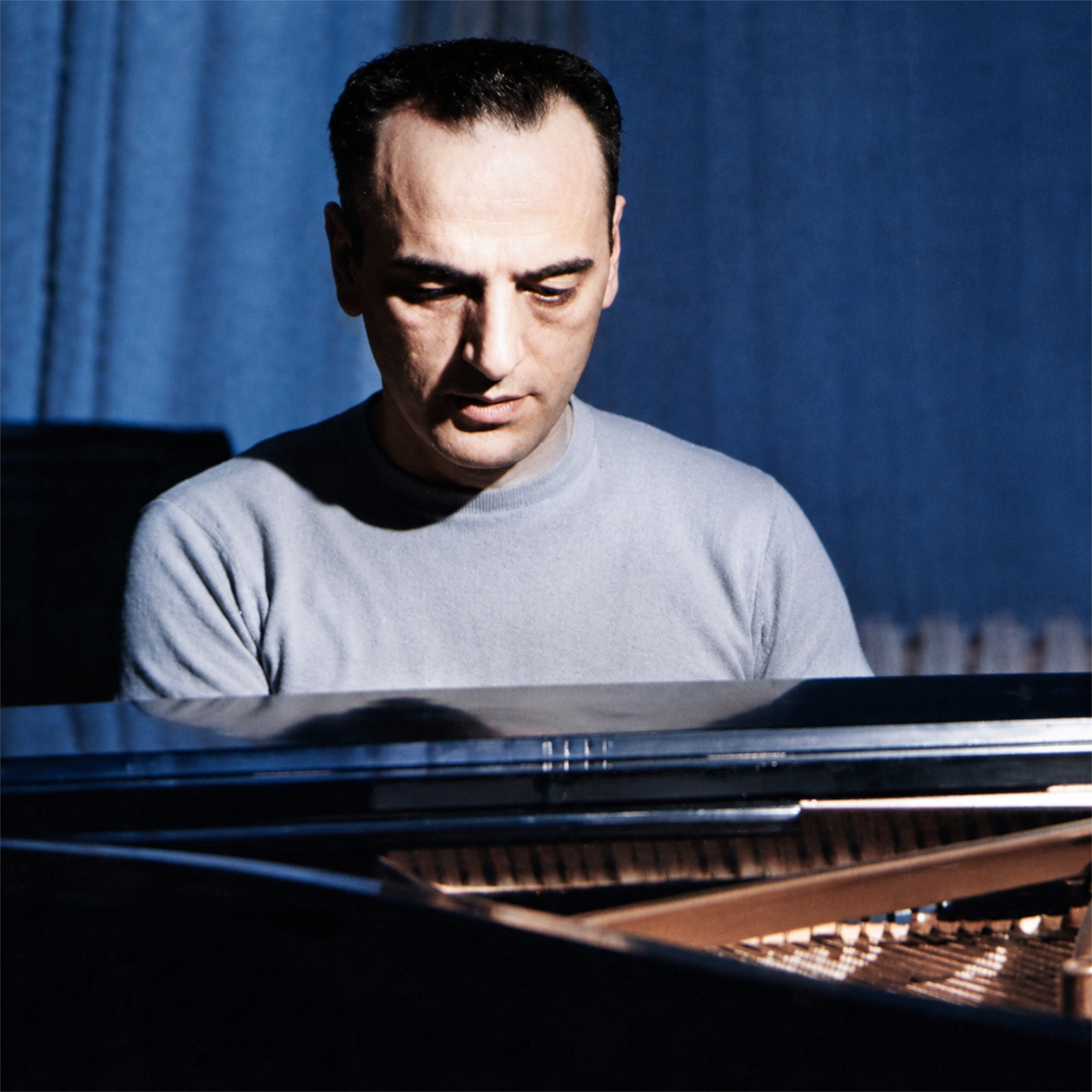
 Harmonic and Melodic Exercises...
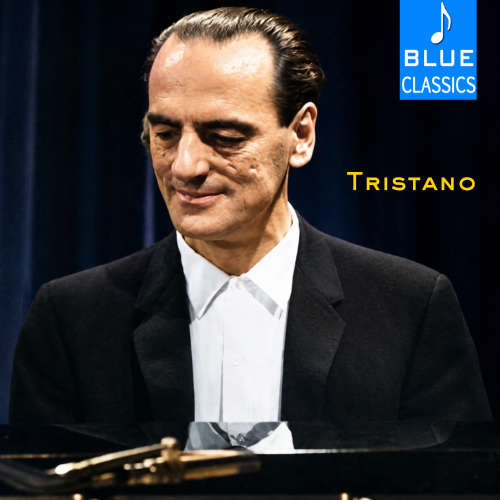 Tristano
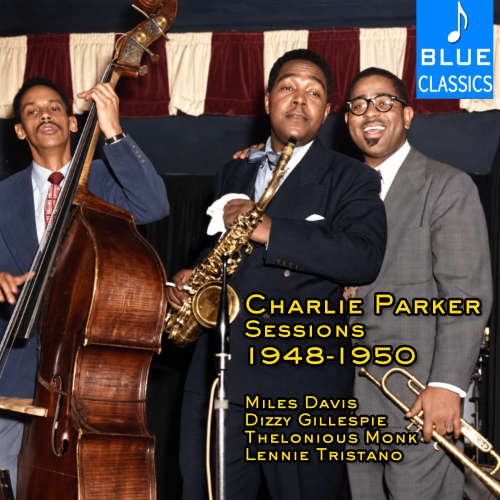 Sessions 1948-1950

Lennie Tristano - pianist
Lennie Tristano (b. March 19, 1919 – d. November 18, 1978) was an American jazz pianist, composer, arranger, and teacher whose work developed an individual approach to improvisation that stood somewhat apart from the principal directions of postwar jazz. Born March 19, 1919, in Chicago, Tristano became associated with the emerging bebop environment during the 1940s, but developed a musical conception that placed particular emphasis on contrapuntal improvisation, rhythmic independence, complex harmony, and the interaction of multiple melodic lines. He also became an influential teacher whose students included Lee Konitz, Warne Marsh, and Arnold Fishkind.Tristano was born with normal eyesight, but lost his sight gradually during childhood, eventually becoming completely blind. His blindness did not prevent him from developing a broad musical education. He studied piano and music theory and attended the American Conservatory of Music in Chicago, where he earned degrees in music. His formal studies gave him a strong grounding in harmony, composition, and classical repertoire, subjects that later informed his approach to jazz.
During the 1940s Tristano began to establish himself as a pianist and teacher in Chicago and subsequently in New York. He was attracted to the improvisational possibilities of bebop but was also interested in ideas that were less common in mainstream jazz. Rather than concentrating primarily on the strong rhythmic attack and frequently rapid tempos associated with bebop, he explored long melodic lines, unusual accents, counterpoint, and harmonic development.
By the middle of the decade, Tristano had begun to attract musicians who were interested in his approach. His teaching became an important part of his career, and his studio served as a place where musicians could experiment with improvisation. Lee Konitz became one of his most important students and collaborators, and Warne Marsh subsequently became another central member of the Tristano school. Their playing developed an approach to improvisation that emphasized continuous melodic lines and close interaction rather than conventional head-solos-head structures. The relationship between Tristano and Konitz remained important throughout their careers.
Tristano's early recordings included sessions as both a leader and sideman. In 1945 and 1946, he recorded with musicians including Billy Bauer, Arnold Fishkind, and Jeff Morton, and his small groups provided an environment in which his developing ideas could be documented. His work increasingly moved toward what later became known as cool jazz, although Tristano himself did not regard his music as belonging neatly to a particular stylistic category.
A particularly important recording session took place in 1946, when Tristano recorded with Charlie Parker and Dizzy Gillespie during a New York session. The encounter placed him in direct contact with two of the principal figures of bebop, although Tristano's own approach remained distinct. His music continued to develop through small ensembles and through his work as a teacher.
Tristano's approach to rhythm was unusual. He encouraged his students to avoid relying excessively on predetermined rhythmic patterns and instead to develop lines that could move independently of the conventional timekeeping role of the rhythm section. He also emphasized the importance of listening and of developing an internal sense of pulse. The resulting music could sound highly fluid, with phrases crossing conventional bar lines and with the musicians responding to one another through contrapuntal lines.
His teaching was not based simply on imitation. Tristano emphasized technical command, harmonic understanding, and the development of a personal musical vocabulary. Among his students were musicians who later became important in their own right, including Lee Konitz, Warne Marsh, Peter Ind, Ronnie Ball, and Lennie Popkin. The group around Tristano subsequently became known as the Tristano school, although the musicians themselves represented different individual approaches.
In 1949, Tristano recorded a series of sessions that became important to his development as a recording artist. These included performances with Konitz, Marsh, Bauer, and rhythm-section musicians. Some of these recordings were issued by Capitol Records, while others appeared on other labels and in later compilations.
One of Tristano's distinctive characteristics was his use of the recording studio as a place for experimentation. In the early 1950s, he began to explore techniques involving tape editing, overdubbing, and manipulation of tape speed. These techniques became particularly controversial because they challenged contemporary assumptions about what constituted a jazz performance. Rather than regarding the studio simply as a means of documenting a live performance, Tristano treated it as another medium through which improvisation could be constructed.
The most famous examples appeared on the album Tristano, released by Atlantic Records in 1955. The first four tracks were “Line Up,” “Requiem,” “Turkish Mambo,” and “East Thirty-Second Street.” AllMusic notes that these recordings surprised the jazz world at the time because Tristano used overdubbed piano lines and, in some cases, altered tape speed.
The album's unusual production methods were closely connected to Tristano's musical ideas. Line Up, for example, was built from improvised material in which the piano was combined with recorded bass and drums. The result suggested a form of ensemble interaction created partly through studio construction rather than entirely through a simultaneous live performance.
Tristano's relationship with Atlantic Records became an important part of his later recording career. Although he was not a prolific recording artist by the standards of some of his contemporaries, his relatively small recorded output contained performances that musicians and critics continued to study. His long periods away from recording were partly related to his concentration on teaching and his increasingly selective approach to recording. AllMusic notes that before the 1955 Atlantic album he had been largely absent from recording for approximately six years and had devoted considerable attention to his teaching.
In the late 1950s and early 1960s, Tristano's teaching remained central to his activities. He continued to work with musicians in New York and developed increasingly sophisticated approaches to improvisation. His students and followers applied elements of his method in different ways, particularly in the treatment of melody, harmony, phrasing, and rhythm.
In 1961, Tristano made the recordings that became The New Tristano. These were solo piano performances recorded in his home studio in New York. The album was first released by Atlantic Records as 1357 in 1962. The performances included works such as “Becoming,” “C Minor Complex,” “You Don't Know What Love Is,” “Deliberation,” “Love Lines,” and “G Minor Complex.” The album represented a different side of his recording work from the studio experiments of Tristano. The recordings were presented as solo improvisations without the overdubbing and tape-speed manipulation associated with some of the earlier Atlantic pieces.
Tristano's solo playing demonstrated how his ideas about improvisation could function without a conventional rhythm section. His lines could imply several musical parts simultaneously, and his phrasing often created the sense of shifting rhythmic layers. The harmonic structures could remain recognizable while the melodic content moved freely across them.
His work during this period had relatively little commercial visibility compared with that of many other major jazz artists. Nevertheless, musicians continued to study his recordings and his teaching. His influence was particularly strong among improvisers interested in linear playing and contrapuntal interaction.
Tristano's relationship with the music business also became increasingly distant. He preferred to concentrate on teaching and on small-scale musical activities rather than pursue extensive touring. His blindness and later health problems further contributed to a more private working life.
During the 1960s, he continued to record sporadically. Among his later projects were recordings for Atlantic and other labels, including Descent into the Maelstrom and later archival releases. His recorded output remained limited, but his influence continued through the musicians who had studied with him and through the recordings that circulated among jazz musicians.
Tristano's ideas were not limited to jazz performance. He approached improvisation as a compositional discipline and expected musicians to develop an internal understanding of musical structure. His teaching emphasized the ability to hear harmonic movement, construct melodies, and maintain rhythmic independence. These principles contributed to the distinctive sound associated with his school.
The influence of Tristano is particularly evident in the careers of Lee Konitz and Warne Marsh. Konitz became one of the leading alto saxophonists associated with the cool-jazz tradition, while Marsh developed a closely related but highly personal approach to improvisation. Their work helped carry some of Tristano's ideas into later decades. The NEA has specifically noted Tristano's influence on Konitz's mature style.
Although Tristano's music was sometimes described as cerebral or detached, his recordings show an emphasis on continuous melodic development and interaction. His approach did not depend upon the dramatic contrasts or large gestures common in some other forms of jazz. Instead, musical structure could emerge gradually through the relationship between phrases, harmony, and rhythm.
Tristano died on November 18, 1978, in New York City, at the age of 59.
Tristano occupies a distinctive position in the history of jazz. He emerged during the bebop era but developed a musical language that followed its own path. His emphasis on long melodic lines, harmonic sophistication, contrapuntal improvisation, rhythmic independence, and the possibilities of studio recording made him both a teacher and an experimenter. His relatively small discography has therefore acquired importance beyond its size, particularly for musicians interested in improvisation as a form of composition in real time.